In a hybrid or off-grid system, the batteries decide how long the lights stay on during load-shedding. The two common choices are lithium and tubular lead-acid, and they suit different budgets and homes.
Tubular lead-acid batteries
- Lower upfront price
- Only about half the rated capacity should be used regularly, to protect battery life
- Need distilled water topped up and terminals cleaned
- Heavy, and need a ventilated space
Lithium batteries
- Higher upfront price
- Most of the rated capacity is usable every day
- Many more charge cycles, so a much longer working life
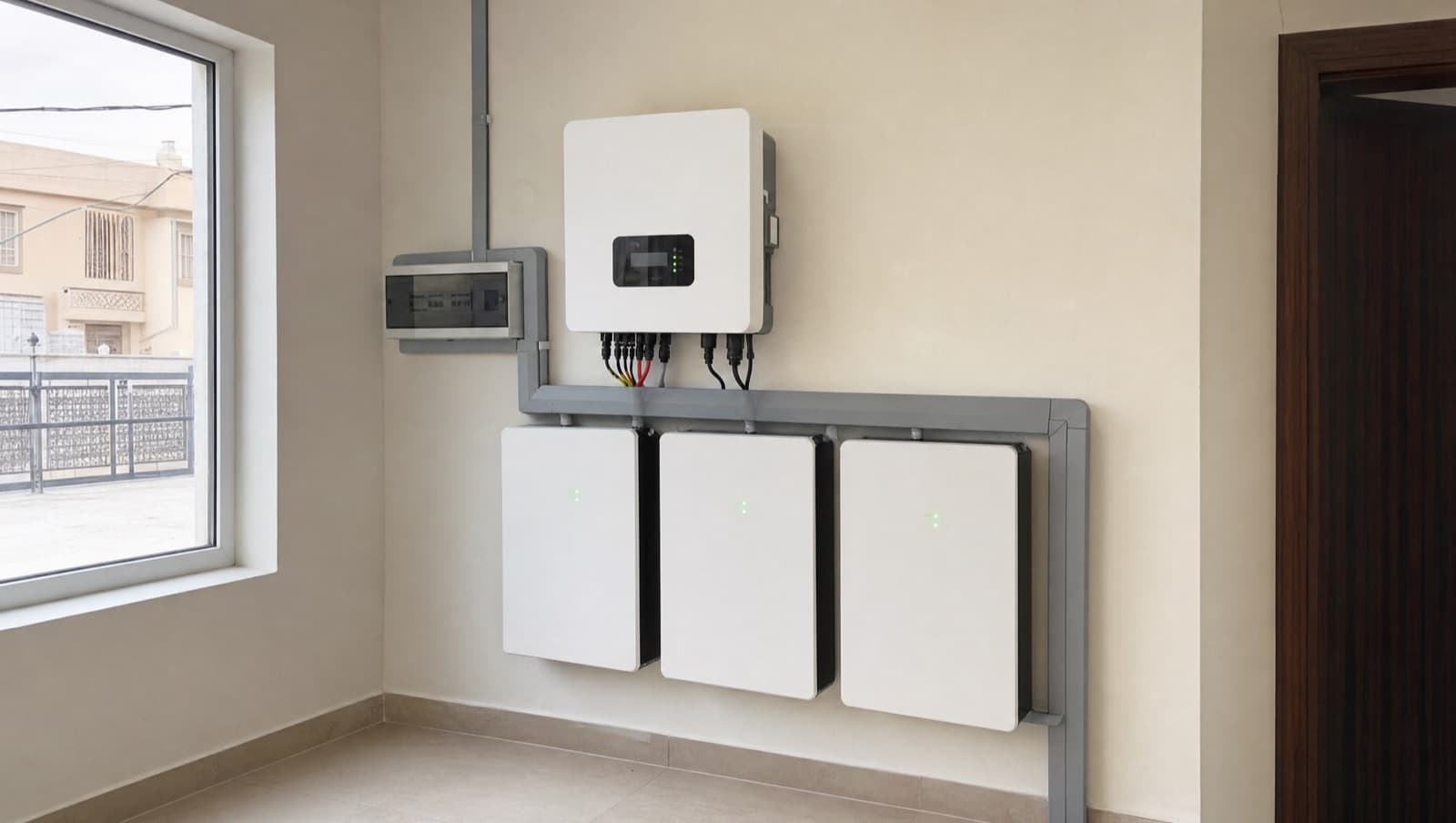
- No water topping; compact and wall-mountable
Which works out cheaper?
Compare cost per usable unit over the battery's life, not the shelf price. Because lithium delivers more usable capacity and lasts many more cycles, it often costs less over the life of the system, even though it costs more on the day you buy it.
Backup time is roughly usable battery capacity divided by the load. A 5 kWh usable battery running 1 kW of fans, lights and a fridge lasts about five hours.
Looking after either type
Have the battery terminals checked and tightened at each maintenance visit, roughly every six months, and straight away if backup time drops or the inverter shows a battery error.